Wednesday, April 4, 2012

Scavenger Cooking


Read my first and second post in this foraging frenzy to catch up! It's time we took our bounty back to the kitchen to get some food in our bellies. On the menu- miner's lettuce salad, sauteed fiddlehead ferns, local oyster po' boy bruschetta, and potato nettle soup drizzled with cream.

I jumped right into the prep while I sipped some wine and shmoozed with my classmates. We carefully washed the nettles and lettuce, peeled potatoes and chopped onions and garlic for three large stock pots bubbling away on a portable stove.


Picture perfect salad garnish of nasturtiums and wild radish seed pods.


Don't forget your gloves when handling nettles! They keep stinging long after you pick 'em.


A kind soul from Marin Organic shucked oysters for our po' boys.


My personal handiwork. I never mind the stinky jobs. Just don't look too closely at my lazy knife skills!


The finished thistle, peeled at the root, boiled and chopped. Like a lovely, deeper, more mysterious celery.

The sauteed fiddleheads, as promised.


Divinity.


Our healthy helping of miner's lettuce, which I forgot to mention in the forage! Impressive how a handful from everyone can quickly add up. Also, the spritely weed on the bottom right is chickweed and usually grows alongside it.


Our finished salad. Notice the wine served in mason jars.


With one of our tour guides, Langdon Cook and some of the crew. Go to his post about the day here and look for yours truly modeling onions and garlic. And then check out our other teacher, Kevin's blog! And then buy both their books.


The dramatic baptism of the nettle to the soup pots. This gets added at the end when the potatoes are all cooked through.


The soup gets combined and then blended. Heating or blending takes the sting out of the nettle, so it can also be added to a raw green juice shake at breakfast. Great if you need ways to get extra protein and super vitamins.


The oysters were quicker to cook, just a little breading and fried in oil.


Technically we didn't personally forage these babies, but with aioli and crostini, they were my faaaavorite. I strategically stayed close to the stove.


Before the fiddleheads got sauteed, we cleaned off all those pesky little hairs for a prettier presentation.


But I still kept my eye on the oysters.


Our gorgeous labor of love, drizzled with cream and garnished with a fern.


And our foraged salad with vinaigrette, walnuts and crumbled blue cheese.


A meal and a food adventure I will never forget. Thanks, Kevin and Langdon!


Tuesday, April 3, 2012

Fantastic Forage


Oh, the things we found during my foraging workshop this weekend! If you read yesterday's post, you'll have learned a little bit more about the farm hosting the event. Now you get to learn what's out there.

Our teacher, and author of the blog and book Fat of the Land, Langdon Cook, came in holding a basket of fiddlehead ferns on his arm that he found on the drive in. I pictured him spotting them from his moving car and skidding to a stop in a dramatic stunt move, a la Dukes of Hazzard.

We passed the plate around as we made introductions. I sampled one, but whoops, there's time for that later. These little beauties are best when cooked! But enough of that- it was time to head out and get down to business to make sure we had lunch.


Our first edible find was oxalis, or sour grass, part of the clover family. This is great as a garnish to salad, with a lemony kick. It can be overpowering, so a small dose is fine.

Kevin Feinstein also joined us, author of The Bay Area Forager and the blog Feral Kevin. He and Langdon were a wealth of wisdom and complimented each other well with their information. Kevin's expertise on foraging in the area made him an indispensable addition to our group.


Here, he points out nasturtium flowers and wild radish seed pods that crunch like pickled green beans when you pick the right one. Is it bad that I wanted to deep fry them in beer batter? I kept that suggestion under wraps. I was with a pretty healthy bunch.


Here is a weed with small yellow flowers used to make a tea similar to chamomile. Can anyone identify it? As usual, I forgot the name. We weren't going to use it in our cooking, but I grabbed some to take home.


A couple things before I get too much farther. As I mentioned in my previous post, foraging should only be done on pristine land, that is, not by the side of the road, near telephone lines, near a building that has had lead paint at any time, or at farms using pesticides and fertilizers.

In this case, we went to a farm that has been organic for 40 years and most of the picking was on upslopes to avoid runoff. The nature of the soil is the important thing, not how clean the plant is.

It's also important to be aware of how you are foraging, so try to keep it sustainable by properly collecting plants so they will keep growing back. I needed to hear this, since I overzealously jumped in and started ripping things out by the roots. Luckily, it was early on before I could cause too much damage. Okay, let's keep going.


Through the poison oak and brush lies our lunch. We were mainly after nettles and miner's lettuce. The nettle is the bright green leaf poking out.


Careful, these really hurt, and I wasn't brave enough to go without gloves. Cut down at least a few layers of leaves on the stalk, and only cut the young ones that haven't gone to seed. If you cut them down like so, they will keep growing back. These are packed with nutrition and I was told they "make kale look like junk food." Just don't touch, or your skin will bug you for the rest of the day.

Langdon pointed out the thistle berries starting to pop up. They won't be ready until the summer, but we were advised they are the greatest thing in the world (and get huge at volcano bases in the Northwest where Langdon is from!).


Forget-me-nots, a gentle reminder of my grandmother as her favorite flower.


Kevin taught all of us about the undervalued thistle, which has a delicious celery quality at the root when allowed to grow large enough. Sadly, they are usually attacked by weed fanatics immediately upon sight and don't have the chance to mature to their ideal edible state. The leaves can also be plucked from the stem to eat.

The soil was soft enough to grab two of these babies for lunch. Can you believe that weeds are

Kevin explained the nettle look alike that often grows next to it. Look out for the brown stem, it should be green all the way through or it's not nettle.

This is tough to see, but that middle weed between the cultivated rows (weeds are a great sign of a dignified organic farm) is mallow, the original marshmallow maker.


Are you hungry enough now? Let's head to the kitchen.


But before I forget, if you have any interest in foraging without an expert, it's important to learn the poisonous plants first, especially when it comes to mushrooms. (I'll stick with my buddies to identify for a while!)

The best field guides are Pojar and Mackinnon's Plants of the Pacific Northwest Coast and David Aurora's All That the Rain Promises and More, which also has my vote for the best book cover.

Let's cook!

Monday, April 2, 2012

Marin Organic and Gospel Flat Farm

Food inspiration renewed! This weekend I was fortunate enough to attend a foraging workshop sponsored by Marin Organic


The foraging location was around Gospel Flat Farms in Bolinas.


On a wet and torrential Saturday, I was greeted by cheerful vintage farm equipment ...


... and colorful hand-painted signs.


Along the actual farm is the perfect place to forage. Organic farms only, where there aren't pesticides, contaminant, or runoff in the soil.


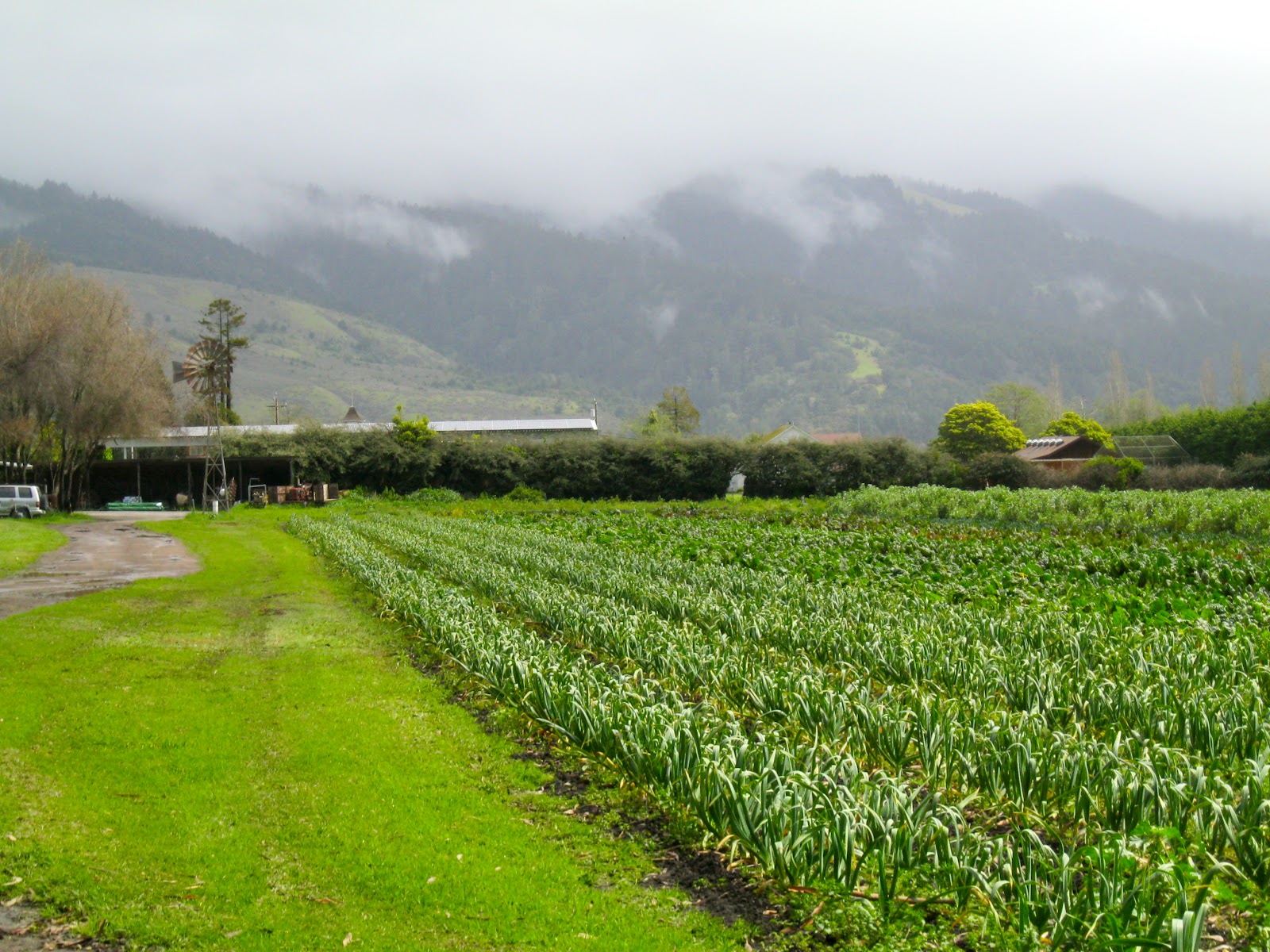
Love the misty mountains in the background.


Beautiful chard, garlic, and others.


And a crab pot back at the farm stand, just in case.


Let the foraging begin!